One click to a priced trade
Strikes are chosen by delta or by distance from the money, and wing width is one setting. The legs arrive with live prices.
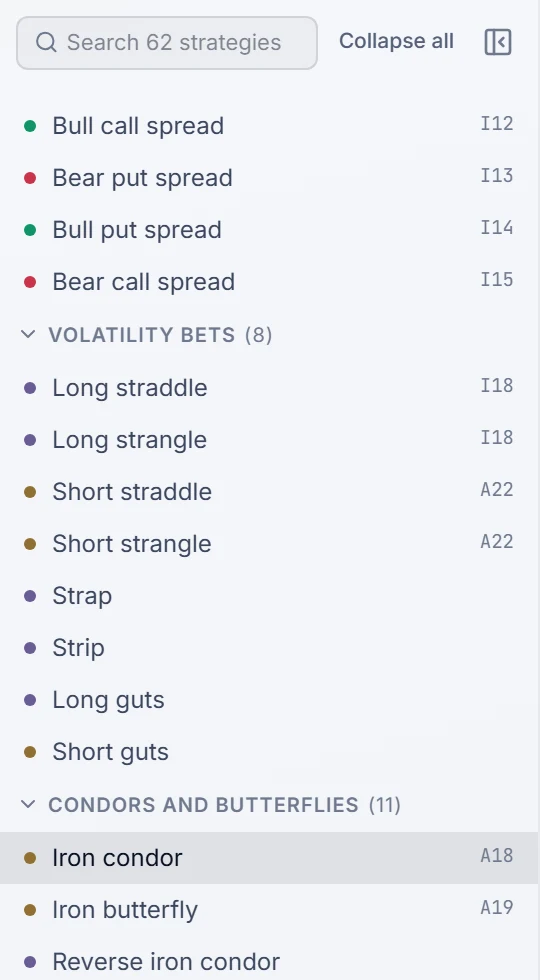
Pick a strategy and the days to expiry. Trident chooses the strikes from the chain, prices every leg and draws the trade on the risk graph, with the Greeks beside it.
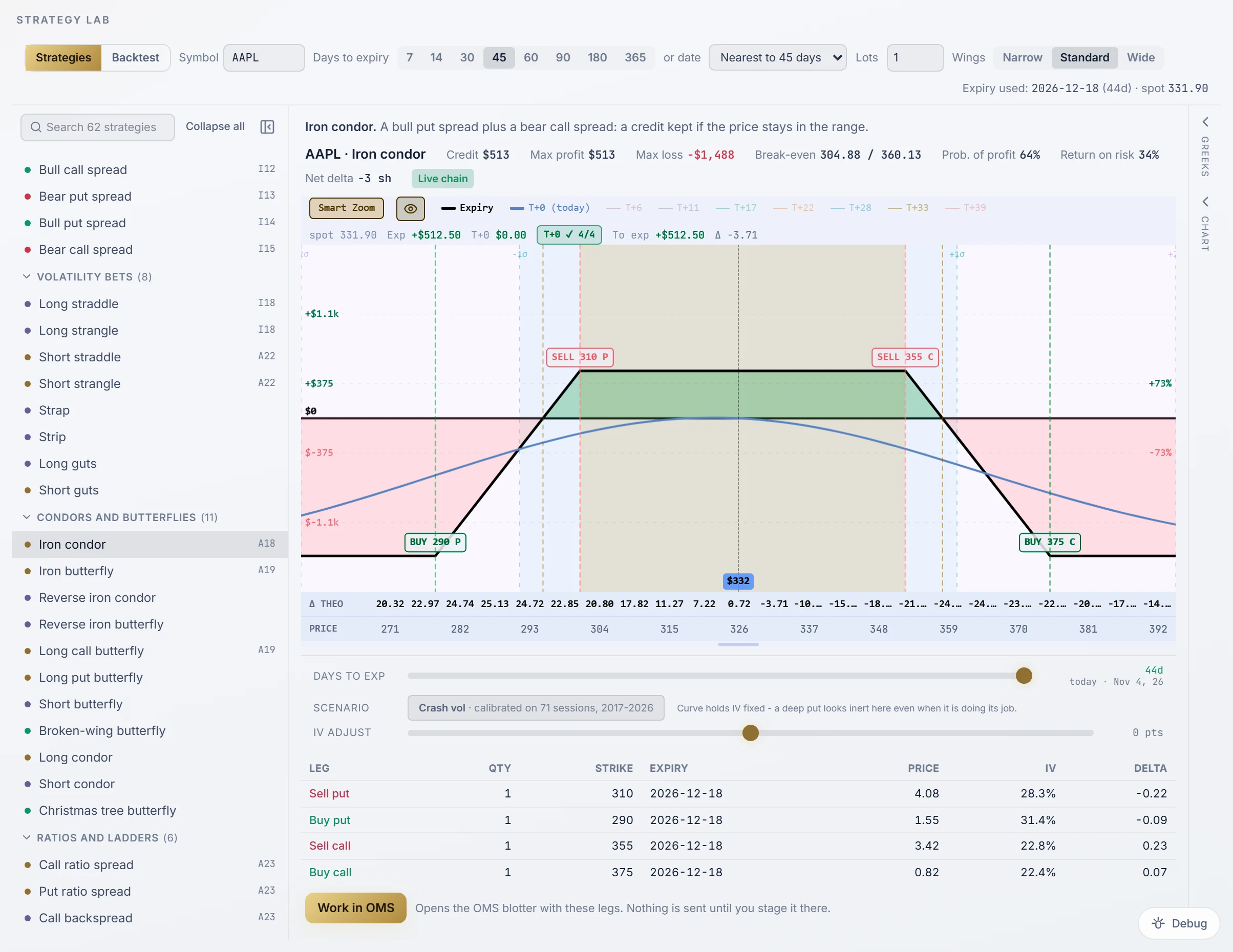
Strikes are chosen by delta or by distance from the money, and wing width is one setting. The legs arrive with live prices.
The payoff at expiry, today's curve and the dates in between, with the break-evens and the credit or debit marked.
Send the finished structure to order management. Nothing is sent to your broker until you stage it and send it.
Start from the idea: an iron condor at 45 days, a call calendar, a covered call. Trident applies the strike rules for that strategy to the chain you have open, so the legs match what you can actually trade.
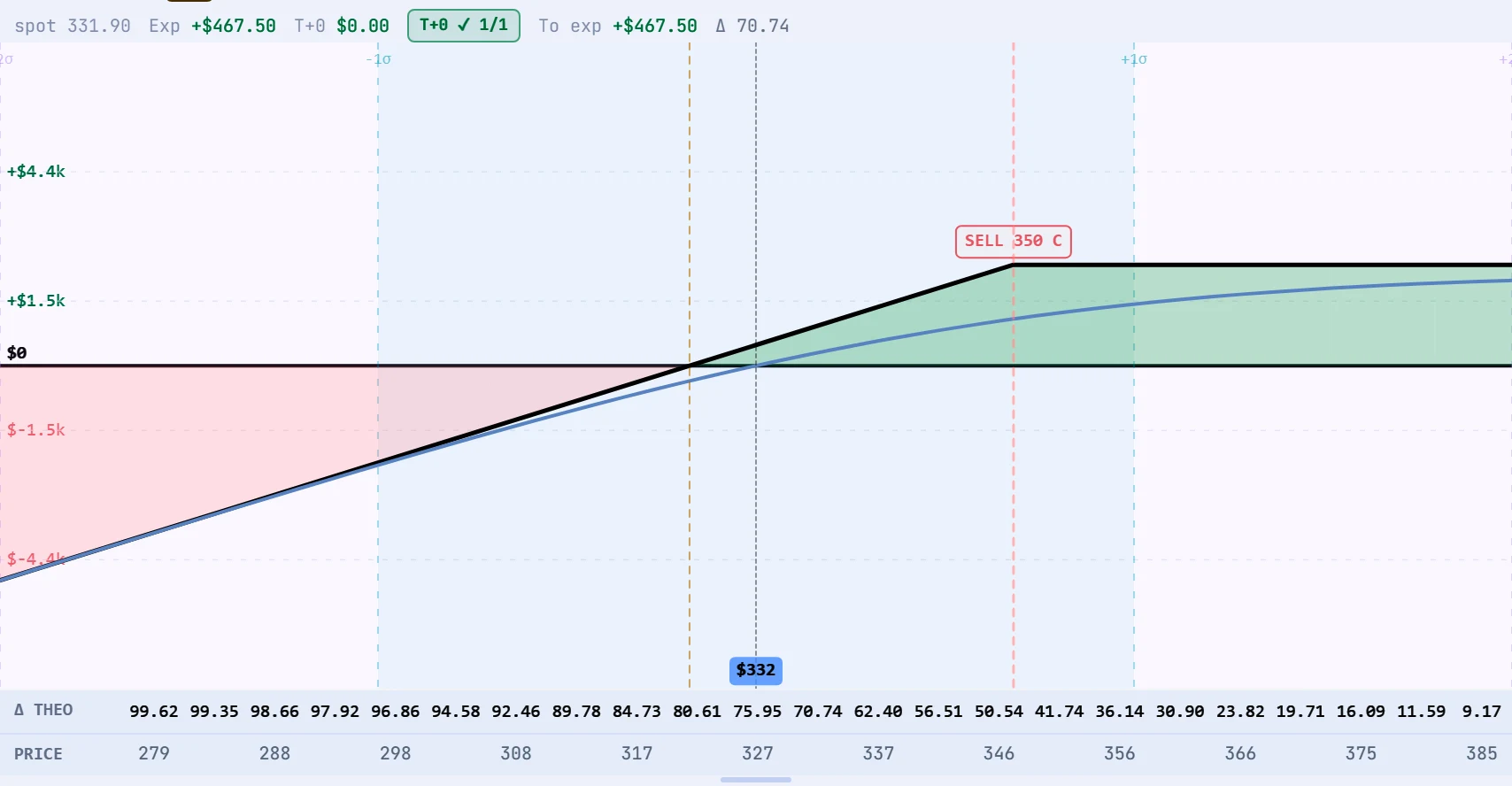
Calendars and diagonals are read at the front expiry, with the later option still priced by the model, so the tent shape is honest. Stock legs sit on the same graph as the options.
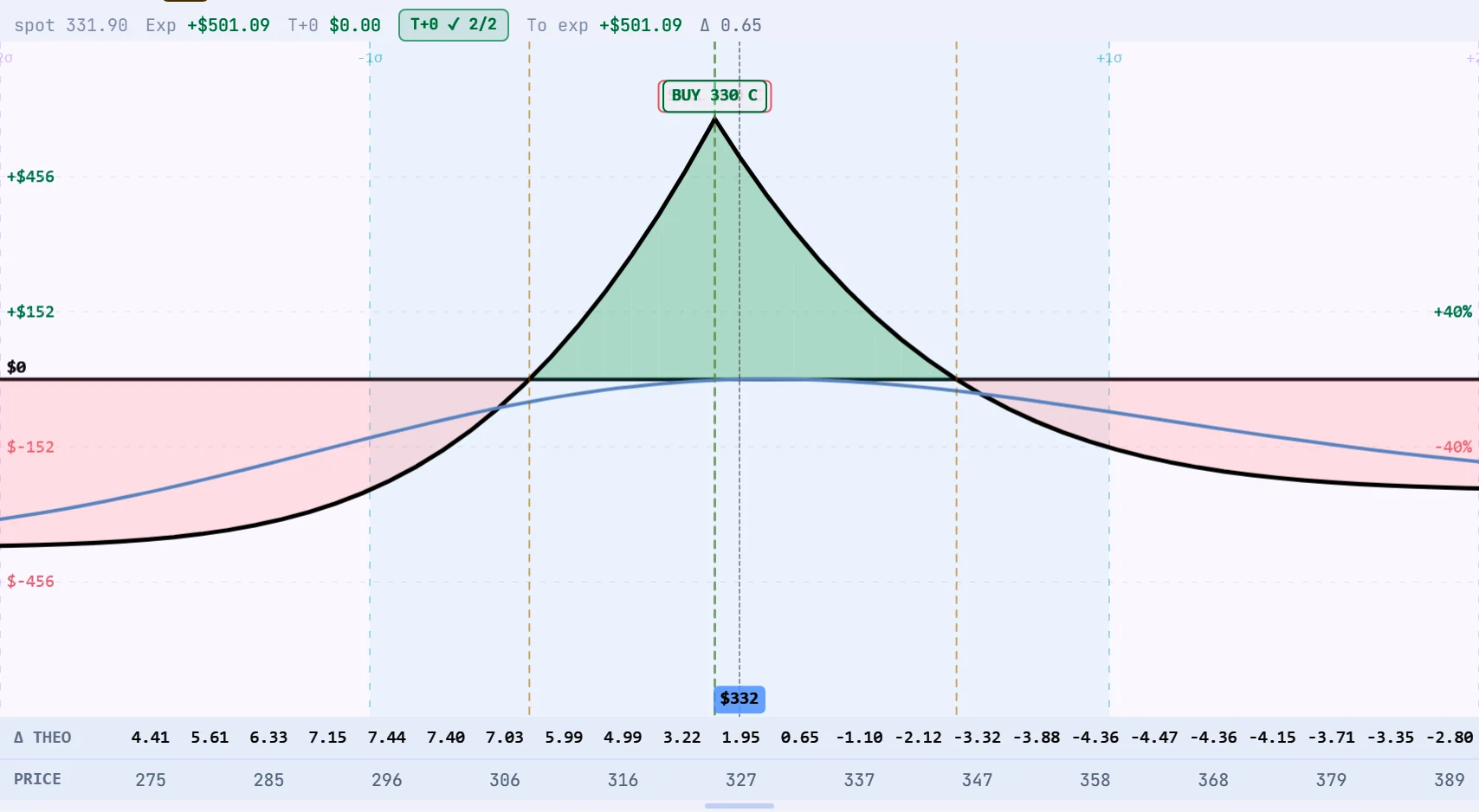
Step a strike, change the wing width or the number of lots, and the graph, the Greeks and the figures update together.
Live terminal screens; prices are for illustration.
62 textbook strategies in nine groups: single options and options with shares, vertical spreads, volatility trades, condors and butterflies, ratios and ladders, combinations, time spreads, a portfolio crash hedge, and arbitrage structures. The full list is on the strategies page.
From the option chain of the broker account you connect, such as Interactive Brokers or tastytrade. The lab shows when a price is live and when it is a model value.
Fund and Private plans can add their own structures. Those stay inside your copy of Trident and are never shared with other customers.